 hniportfolio.comhniportfolio.com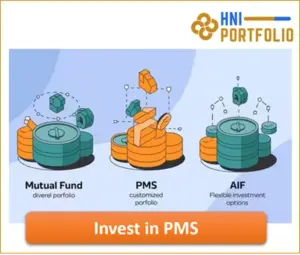
If you’re trying to decide between PMS, AIF, and mutual funds, you’re asking the most common question we hear from high-net-worth individuals (HNIs) in India right now. This is probably the single most common question we hear from high-net-worth individuals...
Let’s be honest, taxation is the part of PMS and AIF investing that most people quietly dread. You’ve picked a good portfolio manager, you understand the strategy, and then tax season arrives, and suddenly you’re staring at a stack of...
Ask ten HNI investors what the “best PMS in India” is, and you’ll get ten different answers – because the honest answer is: it depends on which category you’re looking at. A small-cap focused PMS and a flexicap PMS aren’t...
Choosing a Portfolio Management Service isn’t like picking a mutual fund off a list. You’re not buying units in a pooled scheme; you’re handing over at least ₹50 lakh to an individual fund manager who will make direct, discretionary calls on...
If you’re an NRI looking for a clear investment guide to PMS and AIF in India, you’ve probably already run into acronym overload: FEMA, DTAA, NRE, NRO, TDS, Form 15CA. It can feel like you need a law degree just to...
If you’re exploring Portfolio Management Services (PMS) in India, there’s one question that trips up almost every first-time investor: “How exactly am I being charged?” Unlike mutual funds, where the expense ratio is capped and published for everyone to see,...
Every year, a fresh batch of investors sign up for a PMS after hearing about a friend’s impressive returns – and a meaningful number of them exit within 2–3 years, frustrated, because it was never the right fit for them...
Before you hand over ₹50 lakh or ₹1 crore to a portfolio manager or fund, ask one question: who’s actually watching that money once it leaves your account? For any legitimate PMS or AIF in India, the answer is SEBI, the Securities...
Most PMS content focuses entirely on getting in – minimum investment, fee structures, choosing a provider. Almost nobody talks about what happens when you want to get out. That’s a gap worth filling, because the PMS exit process works quite...
Between the glossy PMS brochure and the investment agreement sits a document most investors barely skim: the Disclosure Document. It’s dense, it’s formal, and it’s easy to treat as a formality you sign and file away. That’s a mistake –...
If PMS terminology feels like a lot to absorb, Alternative Investment Funds (AIFs) add another layer: three distinct SEBI categories, each with its own investment focus, leverage rules, taxation treatment, and liquidity profile. Choose the wrong category for your needs,...
Open any PMS factsheet or AIF Disclosure Document, and you’ll hit a wall of terms that sound like they belong in a finance textbook: Alpha, Drawdown, Hurdle Rate, High-Water Mark, XIRR. None of these is actually complicated once explained properly. But...